
 Indirizzo di saluto del Presidente Luciolli
Dear Director, Colonel Di Pietro, Excellencies, Authorities, Distinguished Guests, Ladies and Gentlemen,
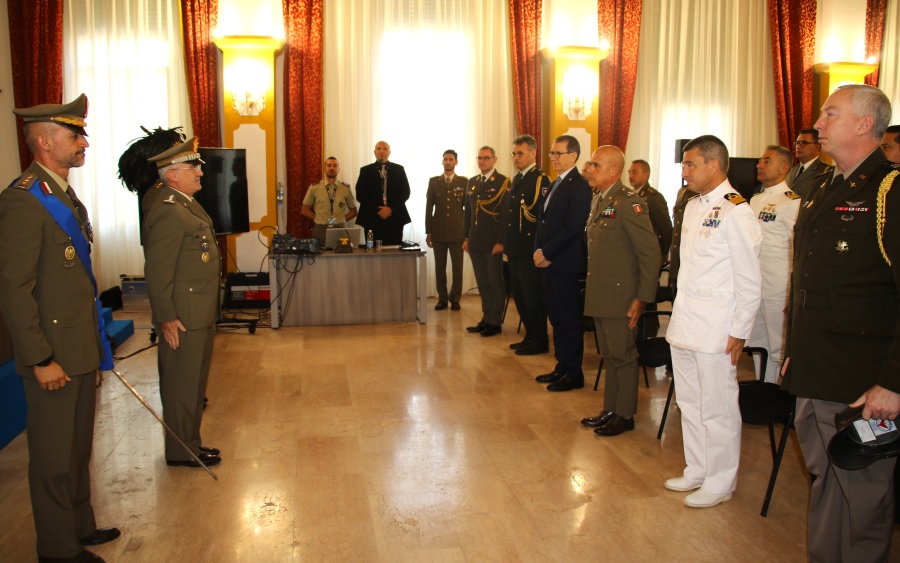
I am deeply honored to take part in this significant Transfer of Authority Ceremony. Today’s event holds value beyond the ceremonial; it takes place in a crucial moment in the evolution of the security scenario which requires a further reflection and implementation of the NATO’s never-ending adaptation process.
The elegant simplicities of the Cold War have vanished, and multi‑domain threats are emerging from the submerged domain to space, from the East to the South.
“The threats we face are global and interconnected” and can emerge with disruptive technologies and unprecedented speed, as testified by the new hypersonic weapons, real-time cyber-attacks, and the potential malign use of Artificial Intelligence.
The NATO’s Strategic Concept reminds us that “Strategic competition, pervasive instability, and recurrent shocks define our broader security environment.”
Moreover, States appears to be no longer the sole wielders of the use force, as violence is increasingly wielded or delegated to non-state entities and extremist factions.
The recent brutal terrorist attacks on civilians in Israel and the unprovoked Russian aggression against Ukraine serve as harrowing indicators.
NATO’s Deputy Secretary General, Mircea Geoană – addressing the NATO Parliamentary Assembly convened in Copenhagen on October 9 – remarked that “We face a fundamental challenge not only to our nations and our peoples, but also to our values, to the things that make us who we are. We are not a military alliance. We’re not even a political military alliance. We are a fundamental alliance based on our values of freedom, democracy, and the rule of law. This is what we are.”
To drive these turbulent times, we cannot navigate merely looking in the rear-view mirror. On the contrary, NATO is requested to implement its Strategic Concept with an innovative and forward-thinking vision, able to adapt the Alliance to the evolving in-security scenario.
In particular, NATO’s southern neighborhood faces security, demographic, economic, and political challenges, exacerbated by climate change, fragile institutions, health crises and food shortages.
This represents a breeding ground for non-state armed groups and terrorist entities, combined with the malign interference of strategic competitors. Instability leads to violence against civilians, especially women, children, and minorities, while causing transnational humanitarian crises and environmental damage.
In the run up to the Washington Summit that will celebrate next July (2024) the 75th anniversary of the Alliance, NATO has initiated a reflection process to effectively address the growing instabilities emanating from the Southern Region. Secretary General Jens Stoltenberg has gathered a team of ten independent experts to reevaluate NATO’s strategy towards its southern neighborhood. Their report, due next April and to be approved at the July Washington Summit, aims to guide the Allies in recognizing evolving challenges and pinpointing effective strategies, especially by identifying areas for collaboration with partner nations and other significant stakeholders.
* * *
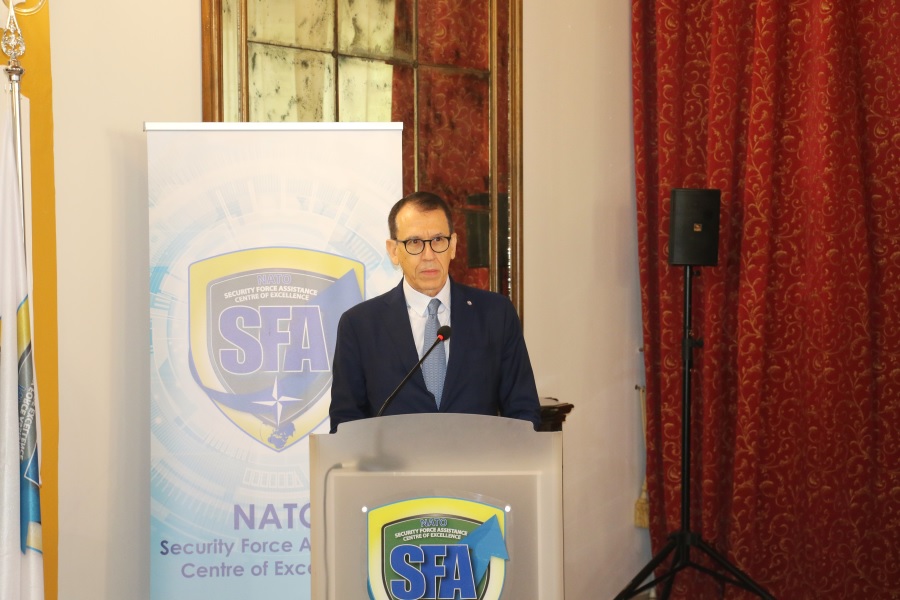 In this dynamic landscape, the Security Force Assistance Centre of Excellence stands at the forefront. Its pivotal role in shaping NATO’s future strategy is evident. At present, Security Force Assistance constitutes an indispensable tool in the whole spectrum of military endeavors, fostering stabilization, reconstruction, capacity-building, and overall security sector reform.
In this context, the NATO Centre of Excellence for SFA has achieved commendable milestones. In a short period of time the Centre became a nexus for SFA discussions, pioneering fresh perspectives, and cultivating an evolving doctrine while rallying an international Community of Interest.
With its groundbreaking thought leadership, holistic approach, collaborations with key international organizations, and high qualified academic institutions, relevant think-tanks, and leveraging military and civilian field expertise, the Centre epitomizes the vision outlined in 1956 by the NATO Wise Men Committee, led by the Italian minister of foreign affairs Gaetano Martino, which stated that “These two aspects of security – civil and military – can no longer safely be considered in watertight compartments, either within or between nations. Perhaps NATO has not yet fully recognised their essential interrelationship, or done enough to bring about that close and continuous contact between its civil and military sides which is essential if it is to be strong and enduring.”
This harmonization between civil and military sectors, a 360° and comprehensive approach, is precisely what this Centre of Excellence embodies and promotes. A successful effort conducted by the SFA Centre of Excellence that has been validated by the numerous editorial initiatives which represent the outcome of high scientific analysis, tested in international debates and conferences. Thus making the Security Force Assistance Concept a living doctrine, timely updated and continuously adapted to the evolving in-security scenario.
At present, the SFA Centre of Excellence constitutes the hearth of an osmosis process providing the lifeblood for a vibrant Community of Interest which plays a vital role in the developing a timely and effective SFA doctrine, thus contributing to the never-ending NATO’s adaptation process.
Moreover, the SFA CoE is paving the way to a further strengthening of the fruitful cooperation established with key international actors and organisations, namely the European Union.
A dynamic comprehensive process that reflects the commitment that since its foundation has characterized the extraordinary leadership and the Staff of the SFA Centre of Excellence.
In this regard, Director Col. Di Pietro, I am both grateful and proud to have been given the opportunity to join this prestigious Centre of Excellence as a Senior Fellow, and to be afforded the honor to officially express in today Transfer of Authority the best wishes for the future endeavors that the Centre will successfully undertake under the new guide of Colonel Matteo Luciani, whom I greet and thank


