
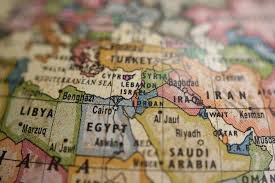
In the near future, the Atlantic Treaty Association (ATA) and its national chapters will be called on to face increasing tasks and responsibilities. The aggression against Crimea and the subsequent escalation in Ukraine has dramatically changed the agenda of the NATO Summit and reminded the Allies of their primary commitment to collective defense and the crucial role of Article 5 of the Atlantic Treaty, which must be considered in times of modern aggression, including with regards to hybrid warfare and cyber threats. Concurrently, due to the latest developments in the Middle East and North Africa, the Mediterranean flank of the Alliance has become increasingly subjected to the threat of extremist forces.
NATO and ATA in 2014
NATO has promptly reacted to the reversal of relations with Russia by reinforcing the security of the member states that are more liable to be affected by the fallout of the events in Ukraine and by reasserting the collective defense of the Washington Treaty. Moreover, NATO has repeatedly stated it is giving its full support to the territorial integrity of Ukraine and the efforts made by the legitimate leadership to restore security and stability. Along these lines, ATA has enhanced its role in the Baltic states and has decided to organize a flag event in Kiev in 2014. This will be a sign of strong political backing to the people and government of Ukraine, and will launch a comprehensive program of training and educational initiatives in the country and at a regional level. In this respect, ATA is conducting a NATO Science for Peace and Security Program in Georgia, while new relations have been established with the Atlantic Council of Moldova.
However, on the eve of its 60th anniversary, it is particularly in the Mediterranean and Middle East that ATA will test its traditional skills in promoting dialogue and cooperation, while fostering peace and stability in Northern and Eastern Europe. The broader region presents a variety of security threats and challenges, which are a growing concern for the Euro-Atlantic and international community. Extremism and its terrorist manifestations, the proliferation of weapons of mass destruction and ballistic missiles, arms trafficking, religious genocides and the massive flows of refugees fleeing wars and humanitarian crises are the most crucial and evident elements affecting today’s security scenario. Nevertheless, the series of uprisings known as the Arab Spring pointed out the existence of even more relevant instability factors, which are of a political, social and economic nature rather than a military one. These instability factors are mostly damaging the new generations, and producing a dangerous fallout in the security domain. In this respect, the European Union and NATO cannot afford to disregard the ongoing developments across its southern neighborhood. In today’s increasingly globalized and interconnected world, the breakout of the uprisings that swept across the region must be considered an alarming wakeup call, urging a more constructive and effective cooperation between the two shores of the Mediterranean.
The role of ATA
In this framework, the Atlantic Treaty Association has a significant role to play. Written in 1956 by Gaetano Martino, Lester B Pearson and Halvard Lange, the Report of the Committee of Three on Non-Military Cooperation in NATO acknowledged the role of the Atlantic Treaty Association and paved the way for NATO’s engagement in cultural and economic cooperation even beyond the North-Atlantic borders. Recalling this message, ATA can act in the Mediterranean and the Middle East by taking stock of the extraordinary experience and accomplishments achieved in cooperation with central and south-eastern European countries. The Euro-Atlantic integration of the Balkans has been successful. However, much work remains in order to complete the unfinished business in the region. In this respect, in 2014, ATA celebrated its 60th anniversary with a council meeting hosted in Budva by the Atlantic Council of Montenegro, thus testifying ATA’s enduring commitment to accompany all Western Balkans nations into the European Union and NATO. Likewise, ATA intends to shore up its Mediterranean and Middle Eastern dimension. There is no Iron Curtain in the Mediterranean separating the South from the North. Yet, a combination of conflicting viewpoints and misconceptions inherited from the past and intertwined with current events, hinders the deepening of relations in a cooperative security perspective, as pointed out by the NATO Strategic Concept. In this respect, ATA has played a pivotal role by conducting numerous dialogues and cooperation activities involving the NATO partner countries of the Mediterranean Dialogue and the Istanbul Cooperation Initiative, and other states and entities, such as the Kurdistan Regional Government.
ATA and the Greater Middle East
The present situation engulfing the Greater Middle East requires major and renewed efforts in order for the Arab and Muslim world to undertake the construction of pluralistic societies where moderation in the political and cultural domain will prevail over extremism and violence. To this end, ATA is poised to intensify its focus on the broader region, building on more than 10 years of relevant dialogue and cooperation in the form of training courses, research projects, high-level conferences roundtables and workshops. In particular, ATA can orient its programs in order to foster cooperative security and reinvigorate the role of NATO partnerships in the Mediterranean and Middle East. In fact, the adoption of synergistic and coordinated responses are crucial in the fight against terrorism, as well as crisis management and prevention, including humanitarian emergencies. Socio-economic issues will also be at the top of ATA’s agenda, with a view to promoting the implementation of modernization and development strategies for the southern Mediterranean. Solving lingering issues – such as youth unemployment, food security and marginalization – will deprive extremist forces of breeding grounds they can exploit, especially in countries that have previously, or are still, experiencing domestic turmoil. Cultural issues are also important. Sectarian divisions are the main cause of conflicts sweeping across the Greater Middle East today. To this end, crucial questions – such as the future of local religious minorities and promoting intercultural dialogue – are handled by specific ATA research programs and relevant initiatives.
ATA has always paid close attention to the successor generation through a series of initiatives, educational courses and events that are attended by young researchers, professionals and PhD and university students coming from Europe, the Mediterranean and the Middle East. The level of interplay has grown remarkably over the past few years, and the achievement of more structured forms of cooperation will significantly contribute to advancing the aims of ATA programs in the Greater Middle East. These activities have allowed ATA to create, consolidate and expand a new living network of decision-makers, experts and researchers, who will be able to enhance the cooperative security perspectives in the Mediterranean and the Middle East. In this respect, the level of cooperation achieved by ATA in the Western Balkans represents an inspiring model for the new generation in the Mediterranean and Middle East, and for the future programs in Eastern Europe as well. ATA outreach in the southern neighborhood proved to be successful and was able to offer the European Union and NATO an extraordinary additional value, since it comes to fill the gap that still exists between the Euro-Atlantic institutions and the public opinions of the Arab world. In doing so, ATA intends to have an actual impact on the ongoing processes thanks to its connection with civil society and the capability to engage relevant authorities and decision makers from NATO member states and partners, as well as from other international organizations and entities. Peace, security and common progress have been the key objectives of the Alliance since its establishment, and so should it be in the present complex international scenario.
A sense of community
In order to achieve this, NATO needs to promote a security culture that is able to reconnect the transatlantic community with the Alliance’s fundamental values. As stated in Report of the Committee of Three on Non-Military Cooperation in NATO, “a sense of community must bind the people as well as the institutions of the Atlantic nations”. In this perspective is the strengthening of ATA, recommitting itself and the public opinion of NATO member and partner countries to the enduring Atlantic values and, after 60 years, willing and able to carry out new challenging tasks both in Eastern Europe and in the Greater Middle East.
Atlantic Treaty Association, NATO Securing Our World, September 2014, pp. 47-49.